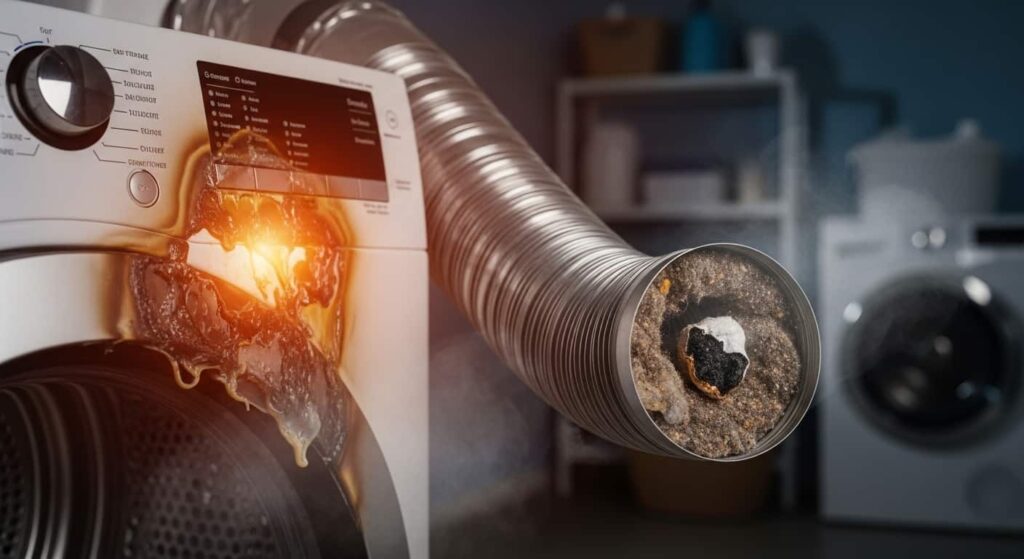
The short answer is yes. A clogged dryer vent can and will damage your dryer if ignored for too long. But the damage to the machine is only one part of the problem. A blocked vent also drives up your energy bill, creates a fire risk, and shortens the life of equipment that costs hundreds or thousands of dollars to replace.
At Alpha Clean Air, we perform dryer vent cleaning in NJ for laundromats, apartment buildings, hotels, hospitals, salons, and residential homes across the state. The calls we get follow the same pattern.
- The dryer stopped heating.
- The clothes come out damp after a full cycle.
- The machine keeps shutting off in the middle of a load.
When we inspect the vent line, we find it packed with lint, debris, and sometimes bird nests that have been building up for months or years.
The dryer was not broken. The vent was blocked. But by the time the owner called us, the machine had already taken damage from running under stress for so long. This blog explains how a clogged vent damages your dryer, what signs to watch for, and why regular cleaning is not optional for anyone who depends on their dryer.
The Parts of Your Dryer That a Clogged Vent Damages
A blocked vent does not damage the dryer in one failure. It breaks it down over time, piece by piece, until something gives out. These are the components that take the hit.
The Heating Element
The heating element is the part of the dryer that generates heat to dry your clothes. When the vent is clogged, the hot air stays trapped inside the machine. The internal temperature rises beyond what the dryer was designed to handle. The heating element has to cycle on and off more than normal to regulate the temperature, and that repeated stress causes it to burn out faster.
Replacing a heating element costs between $100 and $400, depending on the brand and model. For a single residential dryer, that is an inconvenience. For a commercial laundry facility running six to ten machines, heating element failures across multiple units become a recurring expense that adds up to thousands of dollars a year.
The Thermal Fuse
Every dryer has a thermal fuse that acts as a safety switch. If the internal temperature gets too high, the thermal fuse blows and shuts the dryer down. A clogged vent causes the dryer to overheat, which means the thermal fuse blows more often. Once it blows, the dryer will not start again until the fuse is replaced.
The fuse itself is inexpensive, usually $5 to $30 for the part. But the service call to diagnose and replace it costs more, and if the underlying vent blockage is not cleared, the new fuse will blow again within weeks. People replaced the thermal fuse three or four times before they realized the clogged vent was the real problem.
The Drum Bearings and Motor
When a dryer runs longer cycles because the clothes are not drying in one pass, the motor and drum bearings accumulate more hours of wear. A dryer that should finish a load in 45 minutes but takes 90 minutes because of a blocked vent is doing double the work. The motor overheats. The bearings wear down. And eventually, the motor burns out.
A motor replacement on a residential dryer runs $150 to $500. On a commercial dryer, the cost can be $500 to $1,500 or more. That does not include the downtime while the machine is out of service, which for a commercial operation means lost revenue and unhappy customers.
The Moisture Sensors
Modern dryers use moisture sensors inside the drum to detect when clothes are dry and end the cycle. When the vent is clogged, and humid air stays trapped inside the machine, the sensors get coated with residue and stop reading correctly. The dryer either runs too long or shuts off before the clothes are dry. Cleaning the sensors helps, but if the vent remains blocked, the sensors keep failing.
Warning Signs That Your Dryer Vent Is Clogged
The damage from a clogged vent does not happen overnight. It builds over time, and there are signs along the way that most people ignore or misread as a machine problem. If you notice any of these in your home or commercial laundry setup, the vent is the first thing that needs to be checked.
- Clothes take more than one cycle to dry, or they come out hot but still damp.
- The dryer feels hot to the touch on the outside while it is running.
- The laundry room or utility area feels warmer and more humid than normal during a drying cycle.
- You notice a burning smell when the dryer is operating.
- The vent flap on the outside of the building does not open when the dryer is running, or you feel little to no air coming out of it.
- Lint is collecting around the dryer, on the floor behind it, or around the vent connection at the back of the machine.
If you manage a commercial property with multiple dryers and your tenants or customers are complaining that the machines are not drying, the vent system is the first place to look. Scheduling dryer vent cleaning in NJ can prevent equipment damage that would cost far more than the cleaning itself.
The Fire Risk That Comes With a Clogged Dryer Vent
We cannot talk about clogged dryer vents without talking about fire. According to the U.S. Fire Administration, there are approximately 2,900 home dryer fires reported each year in the United States. The leading cause is failure to clean the dryer vent. These fires result in an estimated 5 deaths, 100 injuries, and $35 million in property loss annually.
For commercial properties, the risk multiplies. A laundromat running ten dryers for 12 hours a day generates far more lint than a single residential dryer. Hotels and hospitals that process large volumes of linens and towels produce lint at a rate that can fill a vent line in months. Multi-unit apartment buildings where each unit has its own dryer connected to a shared vent system are at risk when even one tenant neglects their lint trap.
The National Fire Protection Association recommends dryer vent cleaning at least once a year for residential properties. For commercial operations, the dryer vent cleaning schedule should be more frequent based on the volume of use.
How Often Commercial Properties Need Dryer Vent Cleaning
The cleaning frequency depends on how many dryers you operate and how many hours they run per day. A single residential dryer that runs four to five loads per week needs annual cleaning at a minimum. A commercial setup that runs dozens of loads per day needs cleaning every three to six months.
Laundromats and Commercial Laundry Facilities
These properties run dryers at the highest volume. Lint accumulates fast, and the vent lines are often longer because they run through walls and ceilings to reach the building exterior. We recommend cleaning every three to four months for high-volume laundromats.
Multi-Unit Apartment Buildings and Condos
Buildings where each unit has a dryer connected to a shared vent system need attention at least twice a year. The shared vent lines collect lint from every unit, and a blockage in the main line affects every dryer connected to it. Property managers who schedule regular dryer vent cleaning in NJ for their buildings report fewer maintenance calls from tenants about dryers not working.
Hotels, Hospitals, and Care Facilities
Any property that processes large volumes of linens, towels, uniforms, or bedding generates lint at a high rate. These facilities should have their vents cleaned every three to six months, depending on the volume. In healthcare settings, clogged vents also create moisture and air quality concerns that can affect patient areas if the vent system is not maintained.
The Cost of Cleaning vs. the Cost of Ignoring It
A professional dryer vent cleaning in NJ is one of the lowest-cost maintenance services a property owner can schedule. For a single residential dryer, the cost is a fraction of what a heating element replacement or motor repair would run. For a commercial property with multiple dryers, the cost of annual or quarterly vent cleaning is far less than replacing even one commercial dryer unit, which can cost $2,000 to $10,000 depending on the size and brand.
And then there is the cost of a dryer fire in a commercial building, which means property damage, business interruption, liability claims, and potential injury. No amount of savings from skipping vent maintenance justifies that risk.
Get Your Dryer Vent Cleaned by Alpha Clean Air
We talk to property owners and facility managers every week who wish they had called sooner. The dryer that burned out could have been saved. The fire that damaged the utility room could have been prevented.
Contact Alpha Clean Air today to schedule your dryer vent cleaning in NJ. Whether you manage one dryer or fifty, we clean the full system, check for damage, and get your airflow back to where it should be. The cleaning takes less than an hour. The damage from skipping it takes much longer and costs much more to fix. Call us now before your next load of laundry becomes your last one in that machine.