Among many home-owning misconceptions, a major one is that most people think residential air duct cleaning is only necessary for massive houses with elaborate HVAC systems.
If you live in a compact apartment or a modest starter home, you’re probably assuming your ducts are somehow clean. This couldn’t be further from the truth. Size doesn’t matter when it comes to air quality, and your small home’s ductwork deserves the same attention as any other home. In fact, small living spaces often make duct cleaning even more critical. With less square footage, contaminants in your ducts have a more concentrated impact on your indoor air.
Here’s why residential air duct cleaning should be on your radar, regardless of your home’s size, and why neglecting this maintenance task could be affecting you in more than one way.
What’s Hiding in Your Ducts?
Before we talk about the why, we need to talk about the what. Your HVAC system moves air in and out of your body, and your ductwork circulates air throughout your living space. If your ducts are contaminated, so is the air inside your home.

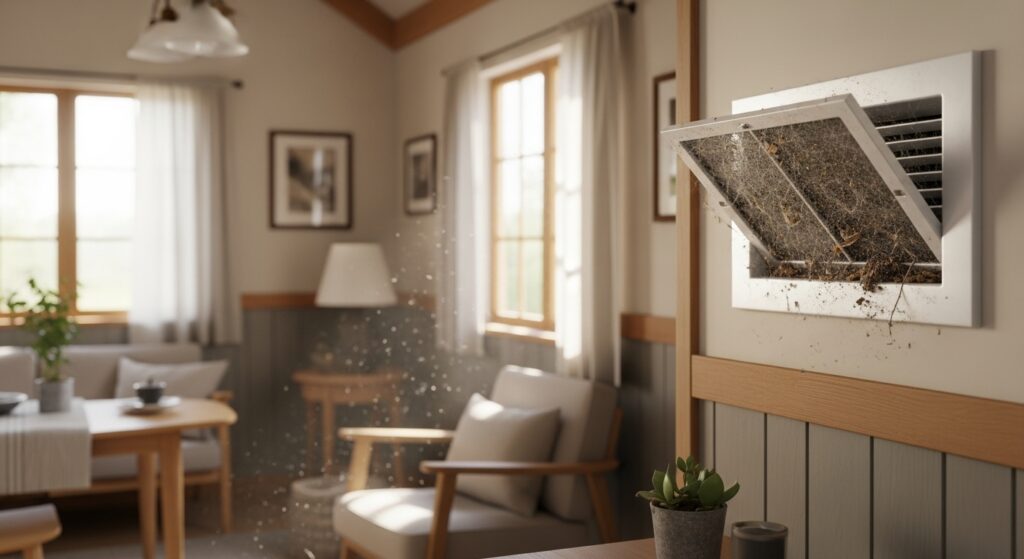
Over time, air ducts collect an unpleasant mix of contaminants. Between fine dust particles, pet dander (if you have pets), and dead skin cells due to constant shedding (we shed about 40,000 dead skin cells every day!), there’s a lot circulating in your home.
But it doesn’t stop there. In humid environments, moisture issues, mold, and mildew can grow inside ducts, spreading spores throughout your living space every time your HVAC system runs. Bacteria thrive in dark, undisturbed duct interiors.
This problem multiplies in small homes; all of this concentrated mixture gets recirculated through a limited space. You’re breathing the same air more frequently, which means higher exposure to whatever pollutants your ducts are harboring.
Dirty Air Ducts Have Health Impacts You Can’t Ignore
The Environmental Protection Agency reports that indoor air can be 2 to 5 times more polluted than outdoor air. Americans spend approximately 90% of their time indoors, which means we’re constantly exposed to these indoor pollutants.
Here are some serious health impacts that this constant exposure can cause:
1. Allergy and Asthma Aggravation
If you or anyone in your household suffers from allergies, dirty ducts are likely making symptoms worse. Every time your HVAC system runs, it pushes accumulated pollen, dust mites, and pet dander directly into your breathing space. People with asthma face even greater risks, as airborne irritants can trigger attacks or make existing symptoms more severe.
In small homes, this problem intensifies because there’s less space for these allergens to disperse. You’re practically living in a more concentrated cloud of irritants.
2. Respiratory Issues
Even people without diagnosed allergies or asthma can experience respiratory problems from dirty ductwork. Chronic coughing, sneezing fits, congestion, and difficulty breathing can all stem from poor indoor air quality.
If you find yourself constantly clearing your throat or experiencing unexplained respiratory symptoms that improve when you’re away from home, your ducts might be the culprit.
3. Mold Exposure
Mold growth in ductwork isn’t always visible. You might not see it on vent covers or near registers, but if moisture has gotten into your system, mold can thrive in the dark, damp interior of ducts.
Mold spores spread throughout your home every time the system operates, and exposure can cause a range of health issues from minor irritation to serious respiratory problems, especially for children, elderly individuals, and those with compromised immune systems.
The “Small Home” Theory is Seriously Flawed
Why do people assume small homes don’t need duct cleaning as urgently as large homes? The myth likely stems from the assumption that less square footage equals less ductwork, which theoretically means less area for contamination.
While it’s true that a 900-square-foot apartment has fewer linear feet of ductwork than a 4,000-square-foot house, this doesn’t mean cleaner ducts or less need for maintenance. In fact, small homes often face specific challenges that make residential air duct cleaning more important, not less:
Higher Air Exchange Rates
Small spaces have lower air volume. Your HVAC system cycles air through the ducts more frequently to maintain temperature, which means contaminants in those ducts get redistributed more often. You’re essentially breathing recirculated air from the same polluted source repeatedly.
Limited Ventilation
Smaller homes, especially apartments and condos, often have fewer windows and limited cross-ventilation. This means less fresh air dilutes whatever’s coming from your ducts. In a large home with multiple windows and natural airflow, contaminated air from ducts gets somewhat diluted. In a compact space, there’s nowhere for it to go.
Older Building Infrastructure
Many small homes, particularly apartments in older buildings, have HVAC systems that serve multiple units or were installed decades ago. These shared systems can accumulate years of buildup from various tenants, and maintenance is often deferred or inconsistent.
Pet Ownership Density
Pet owners in small homes face unique challenges. Your pet sheds the same amount whether you live in 800 square feet or 3,000 square feet. That pet dander has less space to disperse in a small home, and more of it ends up concentrated in your ductwork.
When Do Small Homes Need Duct Cleaning Most?
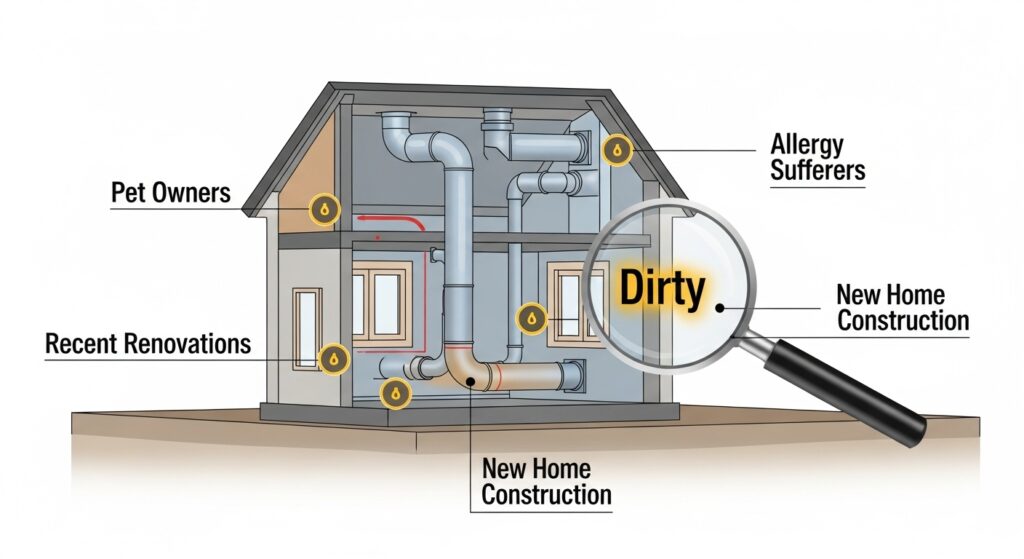
Most professionals would say getting a professional duct cleaning service every 3-5 years for most homes is a decent amount. However, you might want to pay closer attention to your cleaning schedule if you fall into any of the following categories:
1. You’ve Just Moved Into a New Place
Whether you’ve just bought a condo or signed a lease for a new apartment, you have no idea what the previous occupants left behind in the ducts.
Prior tenants might have had pets, smoking habits, or simply never performed any maintenance. It’s always a good idea to start afresh if you’re not sure how the previous owners kept the space.
2. If You Have Pets
Dogs and cats are wonderful companions, but they shed constantly. In a small home, pet dander accumulates quickly in the ductwork. If anyone in your household has pet allergies, more frequent duct cleaning (every 2-3 years instead of 3-5) can be a game-changer.
3. You’ve Just Gotten Some Renovations or Repairs Done
Any construction work, even minor projects, generates an enormous amount of fine dust. Drywall dust is particularly problematic because it’s incredibly fine and gets everywhere. After renovations, painting, or major repairs, residential air duct cleaning removes these construction contaminants before they circulate for months or years.
4. If Someone Smokes Indoors
Tobacco smoke residue and odors permeate ductwork. If someone in your home smokes, or if previous occupants did, your ducts likely harbor smoke particles and tar buildup. In small spaces, these odors and contaminants are especially concentrated.
5. You Spot Visible Mold or Notice Musty Odors
If you see mold growth around vents or notice musty, unpleasant odors every time your HVAC runs, professional cleaning is necessary. Mold in ductwork is a health hazard that only gets worse over time, and attempting DIY removal typically spreads spores rather than eliminating the problem.
6. Unexplained Respiratory Issues in the House
If household members experience respiratory symptoms such as chronic coughing, sneezing, congestion, or difficulty breathing, dirty ducts might be the cause. This is particularly common in small homes where there’s no escape from contaminated air circulation.
7. Pest Infestations
Rodents living in your ductwork are dangerous. Droppings, nesting materials, and decomposing pest remains contaminate your air supply. Residential air duct cleaning following pest removal is the best way to handle this.
Also Read: Signs Your Air Ducts May Be Infested With Pests and How to Handle It
What Does Residential Air Duct Cleaning Involve?
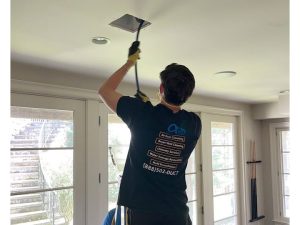
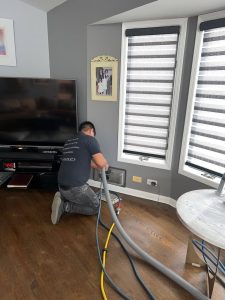
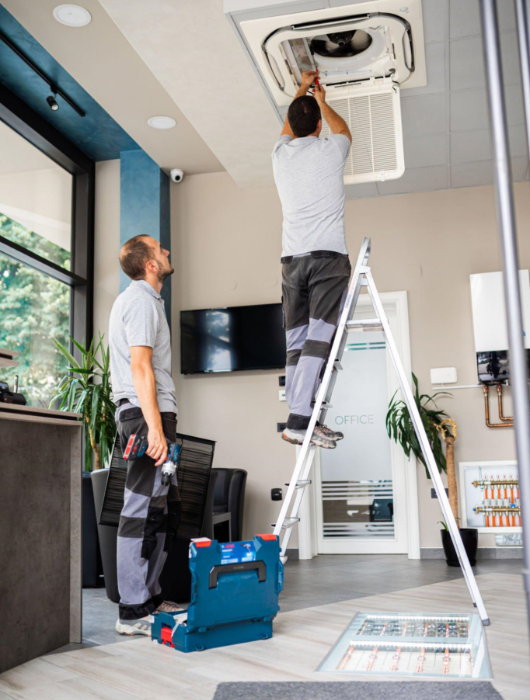
Residential air duct cleaning helps you appreciate why DIY methods fall short. Professionals have the tools, expertise, and experience you simply can’t match as a homeowner.
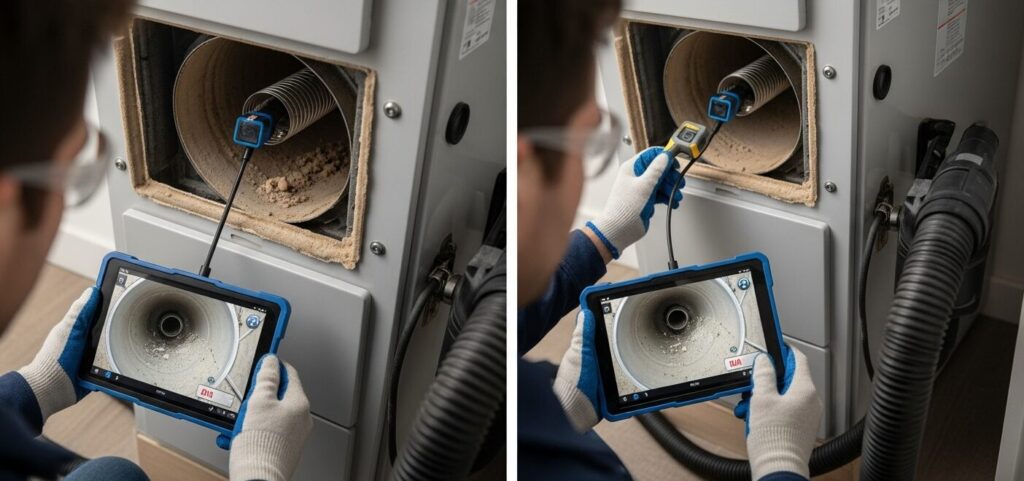
The process typically involves:
- Inspection: Technicians examine your ductwork to assess contamination levels and identify any damage or problems.
- Access Point Creation: Small access holes are cut in strategic locations to allow cleaning tools to reach throughout the system.
- Agitation and Loosening: Brushes, air whips, and other tools break up stuck-on debris and dislodge accumulated dust.
- Vacuum Removal: Powerful vacuums extract all loosened material using negative pressure that pulls contaminants out of your system.
- Component Cleaning: Registers, grilles, diffusers, and other HVAC components are removed, cleaned, and reinstalled.
- Sanitization: If mold or significant contamination were present, antimicrobial treatments may be applied.
- Final Inspection: The system is checked to ensure thorough cleaning and proper function.
Can You Maintain Clean Ducts Between Professional Cleanings?
We get asked by clients all the time: Is there a way you can keep your ducts clean in between cleanings?
The answer is yes! Here’s how:
Change Filters Regularly
Change your HVAC filters every 1-3 months, depending on usage, pets, and allergies.
Vacuum Vents and Registers
Regularly vacuum or wipe down vent covers and registers. This prevents dust from being pulled back into the system when it starts up.
Control Moisture
Use dehumidifiers in damp areas to prevent mold growth. Address any water leaks or moisture problems immediately. Even the smallest amounts of water in ductwork can result in mold growth.
Regular Household Cleaning
Dust and vacuum your home frequently to reduce the amount of dust that gets pulled into return vents.
How Do You Choose a Professional Service?
Unfortunately, the residential air duct cleaning has its fair share of fly-by-night operators offering suspiciously cheap services, only to provide inadequate cleaning or attempt aggressive upselling once they’re in your home.
When choosing a residential air duct cleaning service, look for:
- NADCA Certification: The National Air Duct Cleaners Association certifies companies that meet industry standards and follow best practices.
- Transparent Pricing: Legitimate companies provide upfront estimates with no hidden fees.
- References and Reviews: Check online reviews and ask for references from recent customers.
- Proof of Insurance: Make sure they’re properly insured to protect against potential damage.
- Detailed Process: They should explain what they’ll do, how long it takes, and what equipment they’ll use.
- Written Contract: Get everything in writing before work begins.
Always be wary of deals that seem too good to be true! They’re either lying to you or providing subpar services.
Small Homes Deserve Clean Air Ducts!
If you’ve been led to believe that small homes don’t need as much care and attention regarding their HVAC systems as compared to bigger homes, you’ve been lied to. Your home’s size doesn’t diminish the importance of clean ductwork. If anything, the concentrated nature of small living spaces makes residential air duct cleaning all the more crucial.
Give Alpha Clean Air a call the next time you need your air ducts professionally cleaned. Not only do we offer impeccable services, but we also bust common myths that homeowners are made to believe!